
Sussex County Court Records After Arrest
The court-record path after a Sussex County arrest usually starts with local custody, then moves into the prosecutor and the Virginia courts. A person may be booked at Sussex County Jail, but the court record is created and maintained by the courts after a warrant, summons, information, indictment, or other charging document is filed. The Sussex County Commonwealth's Attorney, not the jail, controls many prosecution decisions after that point.
Virginia's local prosecutor is the Commonwealth's Attorney. Sussex County's official page names Regina Sykes as Commonwealth's Attorney and says the office prosecutes warrants, indictments, or information charging felonies and Class 1 and 2 misdemeanors. That distinction is central: a jail booking allegation can differ from the charge the prosecutor files, amends, reduces, dismisses, or declines to pursue. Booking photos and jail-service questions belong with the jail side, while formal charge status belongs with the court record. Booking photo details are addressed separately on the jail mugshots page.
Find Sussex Arrest Court Records
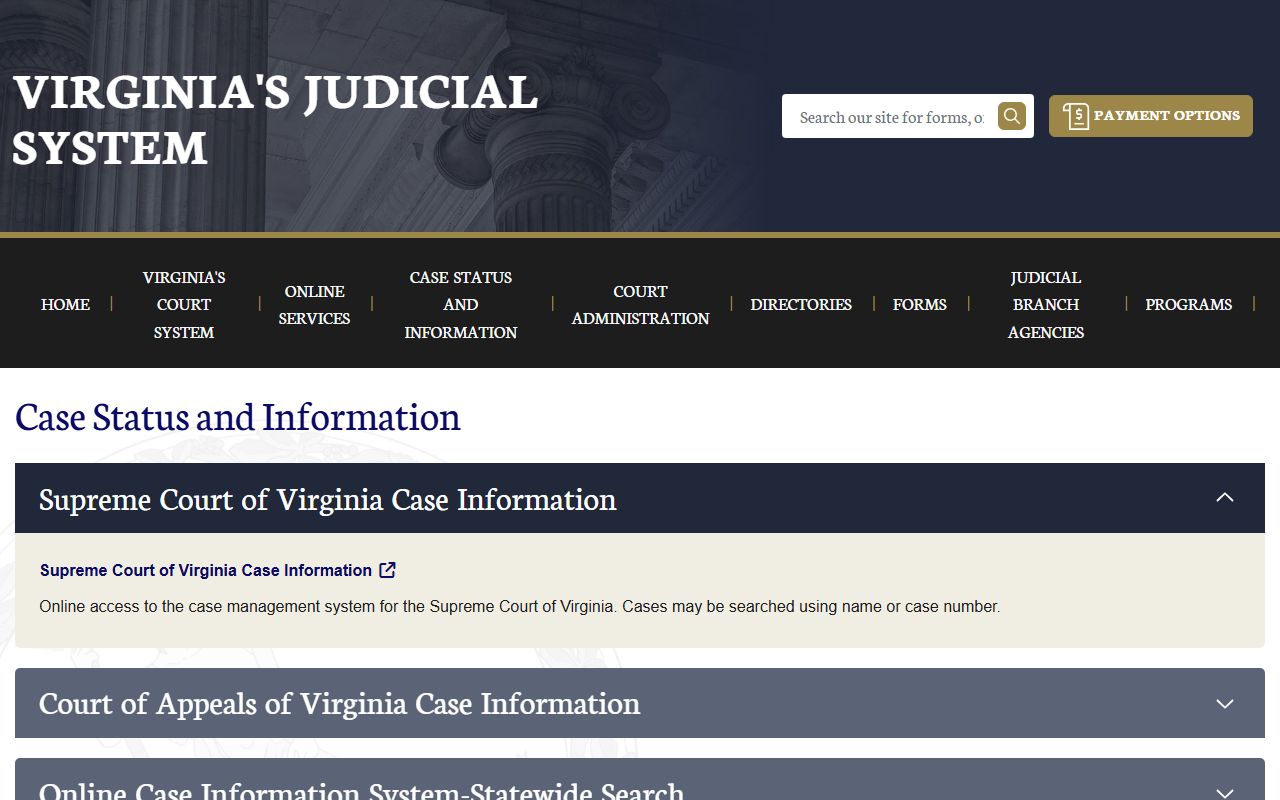
Use the Virginia judicial branch case systems once charges are filed or a hearing exists. The Virginia case-status page links the Online Case Information System statewide search, General District Court Case Information, Circuit Court Case Information, and JDR case information. Statewide OCIS covers adult criminal case information in JDR district courts, criminal and traffic case information in general district courts, and select circuit courts. General District Court Case Information is locality based and supports civil, criminal, and traffic searches.
- Open the Virginia court case information system that fits the case stage. Use statewide OCIS for broad adult criminal searching or the General District Court system for locality-based criminal and traffic cases.
- Select Sussex County or the relevant Sussex court when the system requires a locality.
- Search by defendant name when no case number is known. Use a case number if one appears on a summons, warrant, bond paper, or clerk notice.
- Open the case result and read each charge separately. One arrest can produce multiple charges with different statutes, levels, dates, and statuses.
- Check whether the case is in General District Court, JDR court, or Circuit Court. Felony matters can begin with preliminary stages in General District Court and later move to Circuit Court.
The Virginia judicial case-status page shows the different case-information systems rather than a single Sussex-only portal.
Court Records After Arrest Fields
The court search fields are different from jail roster fields. A court search is built around case identity, defendant identity, court, date, and case type. It does not replace a jail custody call, and it does not function as a mugshot gallery.
| Field Label | Type | Required | Options or Format Notes |
|---|---|---|---|
| Court/locality | Dropdown | Required in locality-based systems | Select Sussex County or the appropriate court when prompted. |
| Name | Text | Optional depending on path | Useful when no case number is known; spelling and middle initial can affect results. |
| Case Number | Text | Optional depending on path | Most precise if available from paperwork, clerk, warrant, summons, or case notice. |
| Hearing Date | Date | Optional depending on path | Mentioned for General District and select Circuit Court pages. |
| Case Type | Tab or filter | System dependent | Criminal, traffic, and civil divisions may be separated. Statewide OCIS focuses covered adult criminal and traffic cases. |
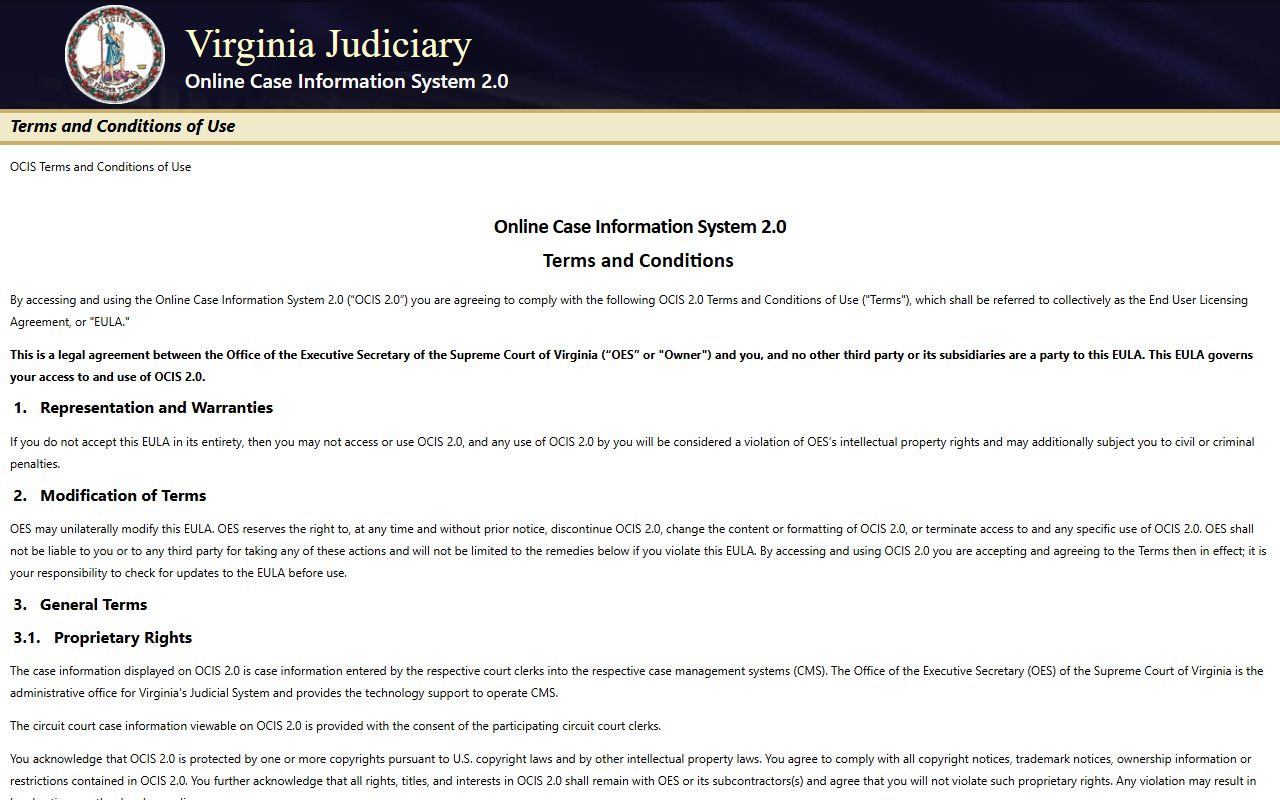
The Virginia Online Case Information System is the statewide adult criminal search landing page captured for this project.
Sussex Arrest Courts
Sussex General and Juvenile and Domestic Relations District Combined Courts are in the 6th Judicial District. The combined court page lists Clerk Ms. Faye Parham Yelverton, phone 434-246-1096, fax 434-246-6604, hours 8:00 a.m. to 4:00 p.m., and address P.O. Box 1315, 15098 Courthouse Road, State Route 735, Sussex, VA 23884. The Sussex County General District Court handles traffic violations, minor criminal cases, and preliminary hearings for more serious felony cases.
Felony criminal matters and misdemeanor appeals move through Circuit Court. The Circuit Court Clerk is Gary Williams at 15088 Courthouse Road, Sussex, VA 23884, P.O. Box 1337, phone 434-246-1017, fax 434-246-2203, with hours listed as 9:00 a.m. to 5:00 p.m. Monday through Friday. The court addresses are not the same as the jail address at Thornton Square, so do not assume one public counter can answer every jail and court question.
Charges Filed After Arrest
A charging document is the bridge between an arrest event and the court record. In Sussex County, the Commonwealth's Attorney may prosecute by warrant, information, or indictment. A warrant or officer allegation may start the process, but the court record must be checked for the exact charge language, statute, charge level, and current status.
| Document | Who Uses or Files It | Common Role After Arrest | Record Caution |
|---|---|---|---|
| Warrant | Magistrate, officer, court, or prosecutor path depending on facts | Can authorize arrest and begin a criminal case. | Warrant language may differ from later amended or indicted charges. |
| Information | Commonwealth's Attorney | Formal prosecutor charging document in eligible cases. | Shows prosecution decision, not merely jail intake wording. |
| Indictment | Grand jury | Formal felony charging document for Circuit Court prosecution. | May arrive after earlier district-court proceedings. |
| Summons or capias/bench warrant | Court or law enforcement | Can create court events or custody after failure to appear or other order. | Check court status and call the clerk for procedural questions. |
Charge Status After Arrest
Charges can change as a case moves. A jail booking entry may reflect the arresting officer's allegation or warrant language. The court record may later show that the charge was amended, reduced, dismissed, appealed, deferred, or resolved by plea or verdict. Each charge should be read separately, because one case can have mixed outcomes.
| Status | What It Means | What to Check Next |
|---|---|---|
| Pending | The charge remains open and has not reached final disposition. | Upcoming hearing date, bond conditions, and court location. |
| Amended | The charge wording, statute, or detail changed. | Compare the original arrest allegation with the current court charge. |
| Reduced | The charge moved to a lesser offense or level. | Disposition, plea terms, and sentencing entry if any. |
| Dismissed | The charge ended without conviction. | Whether expungement may be available under Virginia law. |
| Nolle prosequi | The prosecutor declined to continue the prosecution on that charge. | Whether the case can be refiled and whether expungement is appropriate. |
| Guilty or convicted | A conviction was entered by plea or adjudication. | Sentence, costs, fines, appeal deadline, and custody impact. |
| Deferred or disposition pending | The outcome is delayed by statute or court order. | Review conditions, review date, and dismissal or conviction consequences. |
| Appealed | The case moved to another court, commonly Circuit Court for misdemeanor appeals. | Search Circuit Court and confirm the new hearing schedule. |
Bond and Holds After Arrest
County-specific bond instructions were not located on the official Sussex sheriff pages. The researched route is to confirm custody and bond status with the jail first, using 434-246-5000 option 3 for the Jail Division or option 4 for Jail Records. Ask whether bond has been set, who can accept it, what payment methods are accepted, and whether any holds prevent release.
| Bond or Hold Type | How It Works |
|---|---|
| Cash bond | Money is deposited to secure release and court appearance. |
| Surety bond | A licensed bondsman or surety posts bond under applicable terms. |
| Property bond | Property is pledged if allowed by the court or magistrate. |
| Personal recognizance or unsecured bond | Release is based on promise to appear or unsecured conditions. |
| Secured bond | Release requires money, property, or surety. |
| No-bond hold | The person remains held until a magistrate or court changes conditions or another hold is resolved. |
| Detainer or agency hold | Another jurisdiction, VADOC, federal authority, probation/parole, or immigration matter may prevent release. |
Warrants After Sussex Arrests
No official Sussex County Sheriff's active warrant list or online warrant search was located. The sheriff site does provide a Crime Stoppers number, P3 Tipline, criminal investigations information, and civil process details, but those are not a public warrant database. Court case systems may show case events connected to bench warrants or failures to appear, while the Sheriff's Office and courts remain the practical route for current procedural questions.
Common warrant types include arrest warrants, bench warrants, search warrants, and fugitive warrants. A search warrant is not the same as an arrest warrant, and an outstanding warrant can result in booking at Sussex County Jail. Because no official public roster was found, jail phone routes and VINE are important after the arrest. A person trying to resolve a warrant should contact counsel and the issuing court or appropriate office for procedural direction rather than relying on the absence of an online list.
Charges vs. Convictions
An arrest and charge are accusations or procedural steps. A conviction is a final adjudication of guilt by plea or court finding. This distinction matters for reading court records after an arrest because a pending charge, dismissed charge, nolle prosequi, or deferred matter should not be described as a conviction.
| Question | Charge | Conviction |
|---|---|---|
| Stage | Accusation or prosecution step after arrest. | Verdict, plea, or adjudication of guilt. |
| Proof Level | May begin from probable cause, warrant, or charging decision. | Requires the legal standard for guilt or an accepted plea. |
| Can Change? | Yes. It may be amended, reduced, dismissed, or not prosecuted. | Can still be appealed or affected by later orders, but it is a disposition. |
| Custody Impact | May affect bond, holds, and pretrial custody. | May affect sentence, VADOC transfer, fines, costs, or supervision. |
| Record Reading | Read status and next hearing before drawing conclusions. | Check sentencing and appeal status for the complete result. |
Sealed vs. Expunged Records
Virginia Code section 19.2-392.2 governs expungement of eligible police and court records. The research supports an important limit: a dismissal, acquittal, or other favorable status does not automatically erase every public trace. A court order and the statutory process control official record treatment.
| Question | Sealed | Expunged |
|---|---|---|
| Public Visibility | Hidden or restricted from ordinary public access by law or order. | Removed from public view under the expungement order and treated under the statute. |
| Applies To | Can apply to certain restricted or protected records. | Eligible police and court records under Virginia's expungement law. |
| Common Trigger | Statute, court order, juvenile or protected-record status. | Eligible dismissal, acquittal, nolle prosequi, mistaken identity, or other qualifying result. |
| Limits | May remain available to courts or law enforcement under defined conditions. | Does not guarantee that every third-party copy disappears. |
| Next Step | Ask the clerk or attorney which record type is restricted. | Use the court process and order, not an informal takedown request. |
Restricted Sussex Arrest Records
Not every arrest-related record is public in the same way. Juvenile matters, sealed records, eligible expunged records, victim and witness identities, active investigative material, undercover information, and records that could jeopardize prosecution or safety can be withheld or restricted under Virginia law. The Sheriff's FOIA page specifically notes law-enforcement exemptions, and Virginia Code sections 2.2-3706 and 2.2-3706.1 are central to criminal-record access limits.
For court records, ask the relevant clerk for procedural information and use official court systems for case data. For custody, release, and immediate jail status, call the jail. For official legal advice about expungement, pending charges, warrants, or bond strategy, consult a Virginia attorney.
Important: This site is not a consumer reporting agency. Do not use court or custody information here for FCRA-covered decisions.